Building an Inclusive PLN: Bridging Philosophy and Practice

The Gap Between Belief and Practice

I may believe in inclusion but that is not enough. In this week’s reading, Moore and Schnellert’s “One Without the Other” inspired me to be more reflective of this uncomfortable reality. Moore and Schnellert point out the contradiction in many educators between believing in inclusion and actually putting it into practice. I’ven always believed in inclusive education. But when I honestly evaluated my PLN, it is made up of people who think like me, have similar contexts, and have a similar educational background. If I am to say that I value diversity, how can I have a PLN that does not demonstrate diversity?

UNICEF. (Jun 13, 2012). inclusive education

This UNICEF video says inclusion is never accidental: It is designed, it is participation and it is belonging – not merely access. It makes me reflect: Am I designing my PLN intentionally for diversity, or letting it happen haphazardly?

PLNs as Tools for Equity

The CAST UDL Guidelines include multiple means of representation, engagement, and expression. Connecting with educators from varied disciplines (special education teachers, multilingual educators, international practitioners, etc.) helps me see how to design learning for all students.

Watch: Shelley Moore Interview – PLN Diversity, Inclusion, and Social Media

Moore’s interview was a great example of why diversifying our networks is not tokenism but rather an authentic desire to seek out voices that will challenge our assumptions. She also points to social media as a way of finding and listening to people outside of our normal circles. I also liked the idea of “one without the other” (Diversity without Inclusion or Inclusion without Diversity). Following international educators has really altered the way I think about accessibility and choice for students.

Taking Action

I am intentional about diversifying my PLN: following more teachers with disabilities, seeking out Indigenous voices, connecting with practitioners in under-resourced contexts, engaging with multilingual experts. It’s time to leave my echo chamber.

Purdue_GEER. (2022, August 2). Building a professional learning network

This video offers some actionable takeaways: following hashtags like #DisabilityTwitter and #IndigenousEdChat, joining global education chats, elevating the voices of marginalized people. The importance of not just observing but participating – commenting, sharing resources from underrepresented voices, using my platform to elevate others.

Conclusion

To actively and continuously work to diversify my PLN is to make that commitment in action. A PLN that is not diverse does not reflect the world my students live in or give me access to experiences and worldviews that can help me to be equitable in my teaching. UDL instructs me to consider variability from the start of design – my PLN needs to be built with diversity in mind, not as an add-on. As Moore states, inclusion begins with presuming competence and making room for all voices. We must start there in our PLNs as well.

References

CAST (2018). Universal Design for Learning Guidelines version 2.2. http://udlguidelines.cast.org

Moore, S., & Schnellert, L. (2016). One without the other: Stories of unity through diversity and inclusion. Portage & Main Press.
Reflecting on My Digital Identity: Personal vs. Professional

The Two Sides of My Digital Self

When reflecting on my digital identity, there are different sides to it. I am impulsive on Instagram and carefree in my group chats; I am strategic on LinkedIn and considerate in my online forums. However, as this video demonstrated, our online footprint, also known as our digital identity, is much more than what we intentionally post. It is our data, locations, tagged pictures, and comments in all online platforms.

I chose this video because it enlightened me on how impossible it is to have personal and professional digital identities. A comment I made on Facebook years ago was in my Google search results next to my online portfolio.

Mapping Visitor and Resident Continuum

White and Le Cornu’s (2011) Visitors and Residents’ continuum allowed me to understand my online activities better. There is no binary of being a digital native or not. White and Le Cornu instead focus on context, motivation, and engagement in V&R and argue that all individuals exist on the continuum. For example, I am more of a Visitor when I search for something on Google or check my bank. There is no trace, and I am single-task-focused. However, I am a Resident on LinkedIn; it is where I maintain my professional relationships and slowly but surely building my presence.

David White’s video shows the V&R mapping of online identities we did in class. Creating my V&R map gave me insights into the amount of Resident activity I participate in, including YouTube, which has become a digital identity on its own with the watch history and subscriptions.

The Tension Between Authenticity and Professionalism

The primary challenge I face with digital identity management is the juggling act of authenticity and professional reputation. For example, last month, I found myself hesitating to share my views on a social issue because my social media platforms are visible to recruiters. I have learned and implemented strategies, though, such as keeping Instagram private, LinkedIn professional, and Twitter somewhere in the middle.

Watch: What Your Digital Footprint Says About You 

Nicola Osborne’s TedX presentation talks about the long-term existence of digital footprints, which is why I Google myself often and think carefully before I hit post. She reiterates the important point that we need to be “conscious creators” of what is said about us.

Conclusion: An Ongoing Journey

It was important to me to take part in this reflection because I realized that digital identity needed continuous and persistent work to be intentional. I found White and Le Cornu’s framework as well as digital footprint theory informative, and it helped me to see both the stark difference in my digital engagement level on various platforms, and the impact of all online actions, present and future. As I continue to think about my digital footprint, I will be more mindful to perform digital audits on a quarterly basis, to be more proactive in creating professional content, and to ensure my presence is more intentional and considered in my digital interactions. I am not seeking to be perfect, but rather to be purposeful and authentic.

References: White, D. S., & Le Cornu, A. (2011). Visitors and Residents: A new typology for online engagement. First Monday, 16(9).

Blog Post #1

Beyond One-Size-Fits-All

The pieces on personalized learning that I read this week really touched a nerve with me. Learning was something that I had to do at school, at home, sitting in lecture halls and working through curriculums that may or may not have been mapped to what I was interested in. It was a one-size-fits-all formula for education. Personalized learning turned it all on its head by shifting from the practice of instruction to partnership.

EDUCAUSE. (2016, April 4). What is personalized learning? . YouTube. https://www.youtube.com/watch?v=6oLNLCO0vfI

When I first started to explore topics of interest and stopped to think how I wanted to pursue a certain learning path, it all seemed foreign. Why don’t I just read the textbook chapter by chapter and be done with it? The more time I spent online, though, the more real it became: I could dive deeply into a topic, find experts and colleagues to work with and learn on my own time. The realization dawned on me: PLNs are a network of such connections and interests that we can access continuously.

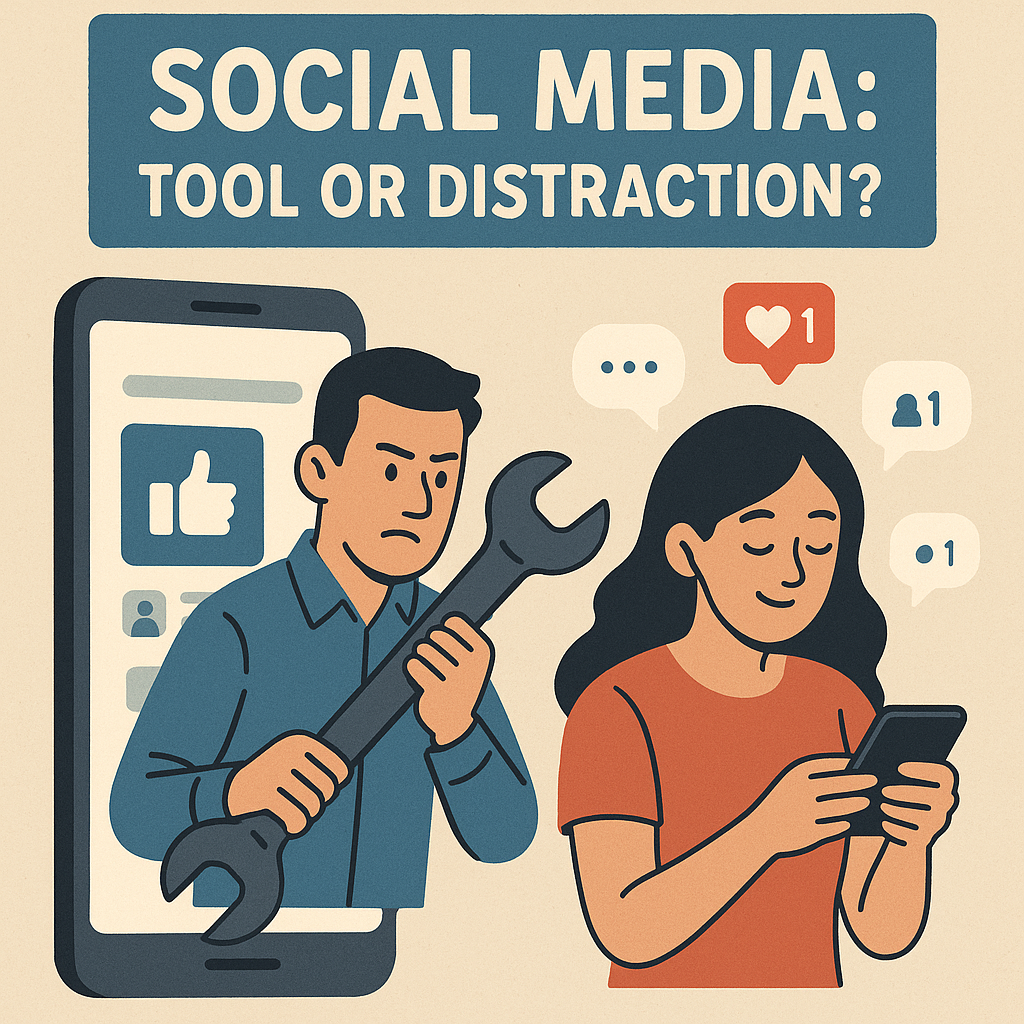
Social Media: Tool or Distraction?

A year ago, I joined a LinkedIn group on the future of education and EdTech. I remember checking it out a few times, but what was fun checking the news was a much more rewarding experience when I started interacting with it. I started reading members’ posts. They would share articles. They would discuss current trends. They would offer me feedback. It was exciting to see education in real-time. We call this a “continuous learning” environment. This is exactly the opposite of a classroom with a class schedule.

DALL-E 3, OpenAI, 2025, AI-generated image.

The drawbacks of PLNs? Twitter can simplify. Instagram’s algorithms distract me. Social media is not inherently good or bad. What makes a difference is how we use it.

Networking is a Strategy

To me, building a PLN is like constructing an entire environment of knowledge. My PLN would include researchers whose work I follow, practitioners sharing their “on the ground” experience and colleagues who provide alternative perspectives to challenge my thinking.

In an era of teacher-centered instruction where knowledge is doled out to students, a PLN enables the free flow of information between all sides. When I post insights of my own or share questions, I am providing something of value back to the community. It is a two-way process.

The path from isolated to networked participant is out of comfort zones, but it is an invitation we can’t refuse. As I see it, personalized learning through PLNs does exactly what traditional education has a hard time doing: letting us learn what we need, when we need, from perspectives and sources across the world.

When we post, we are building our digital footprint. The risks of putting ourselves out there are substantial, but so are the opportunities of learning as a part of a connected world.

© 2026 Shihong Li’s blog

Theme by Anders NorenUp ↑